

TL;DR:
- A successful branding strategy extends far beyond a logo, combining brand identity development, brand positioning strategy, brand messaging strategy, and brand voice development to create a cohesive and memorable presence across every customer touchpoint.
- Modern businesses need a strong digital branding strategy built on brand consistency, visual identity design, and a recognizable digital brand presence that strengthens brand recognition growth and helps audiences instantly identify and trust the brand.
- Effective brand storytelling strategy, content-driven branding, and strategic brand communication enable businesses to shape customer perceptions, build emotional connections, and support long-term customer trust and credibility in an increasingly competitive digital environment.
- Brands that embrace omnichannel branding, social media branding, and digital customer engagement create seamless experiences across platforms, improving audience engagement strategy, supporting consumer brand loyalty, and strengthening overall brand equity.
- Sustainable growth comes from aligning marketing and branding, investing in brand architecture planning, maintaining brand authenticity, and developing future-ready branding systems that support differentiation, scalability, and long-term business success.
Ask someone to describe a brand, and chances are they’ll start with the logo.
The swoosh.
The golden arches.
The bitten apple.
Logos are powerful symbols. But in today’s digital world, they’re only one piece of a much larger puzzle.
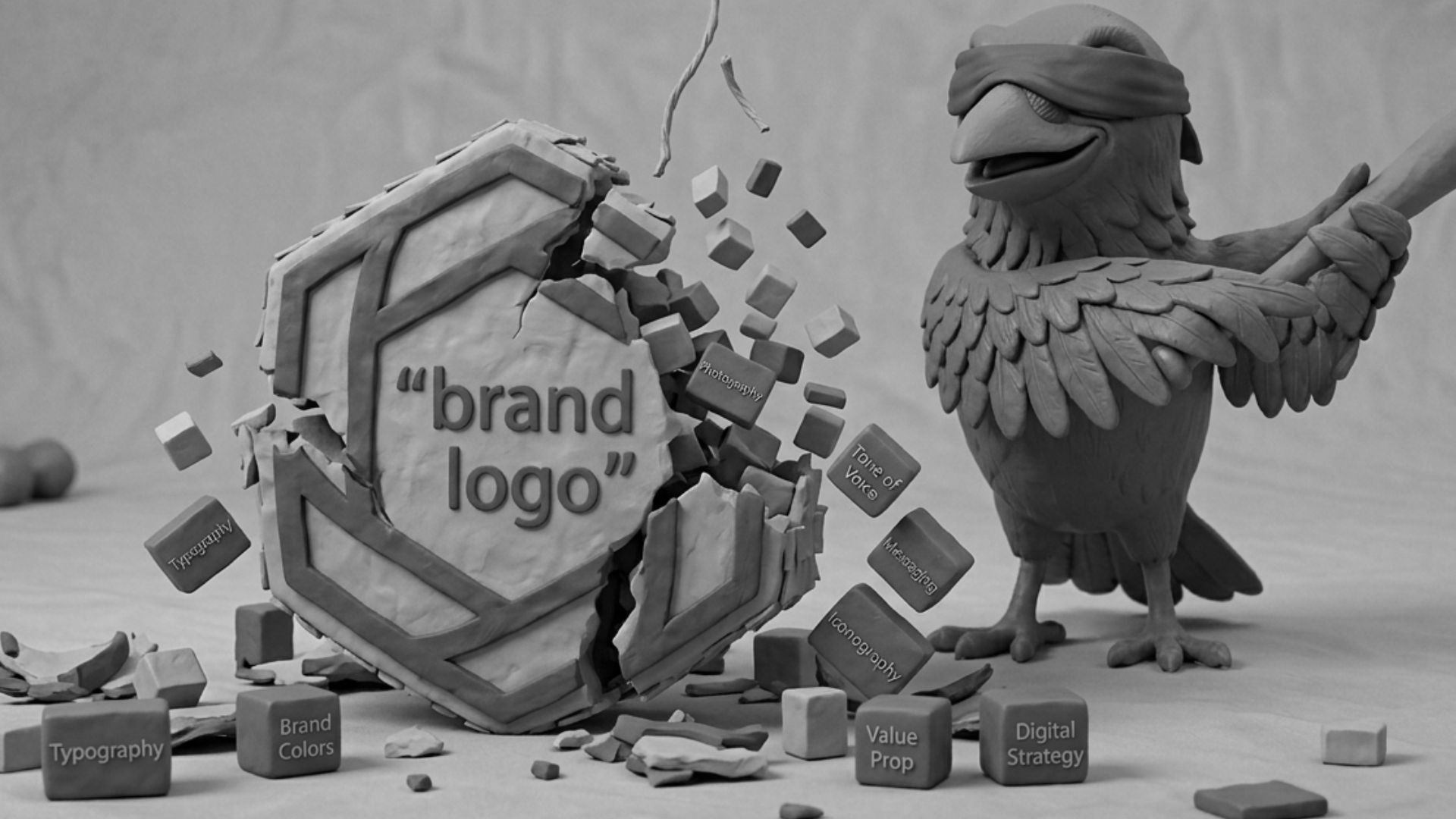
A modern branding strategy is no longer defined by a visual mark alone. It encompasses every interaction, impression, experience, and conversation people have with a business.
In a marketplace flooded with content, AI-generated media, and endless competition for attention, brands that rely solely on a logo risk becoming forgettable.
The brands that win are the ones that build complete systems.
Why a Branding Strategy Is More Than Visual Identity
Many businesses confuse branding with design.
Design is part of branding, but branding itself is much broader.
A complete branding strategy includes:
- Brand identity development
- Brand positioning strategy
- Brand messaging strategy
- Brand voice development
- Brand storytelling strategy
- Customer perception management
- Strategic brand communication
Your logo represents your brand.
It is not your brand.
Your brand is how people think, feel, and respond when they encounter your business.
That perception is built through hundreds of touchpoints over time.
Brand Identity vs Brand Image in the Digital Era
One of the most important distinctions in modern branding is the difference between identity and image.
Brand Identity is what a business intentionally creates:
- Visual identity design
- Messaging
- Tone of voice
- Brand values
- Positioning
Brand Image is what customers actually perceive.
The goal of an effective branding strategy is alignment.
When identity and image match, brands build:
- Customer trust and credibility
- Consumer brand loyalty
- Brand recognition growth
- Long-term brand growth
When they don’t match, confusion replaces trust.
And confused customers rarely become loyal customers.
Building a Consistent Digital Brand Presence
Modern businesses rarely interact with customers through a single channel.
Customers encounter brands across:
- Websites
- Social media
- Search engines
- Email marketing
- Video content
- Customer support interactions
- Online communities
This makes omnichannel branding essential.
Strong digital brand management requires:
- Brand communication consistency
- Unified messaging
- Consistent visual branding systems
- Cohesive customer experiences
Every interaction should feel connected.
Customers should recognize your brand whether they find you through Instagram, Google, LinkedIn, or an email newsletter.
Why Brand Storytelling Matters More Than Ever
Technology changes.
Human psychology does not.
People remember stories more than features.
This is why brand storytelling strategy remains one of the most powerful tools in modern branding.
Stories help communicate:
- Purpose
- Values
- Differentiation
- Personality
- Vision
Effective content-driven branding turns businesses from service providers into memorable identities.
The strongest brands are often those that make customers feel something.
Emotion drives recall.
Recall drives preference.
Preference drives growth.
Brand Authenticity in an AI-Generated World
The rise of AI has created a new challenge.
Consumers are increasingly exposed to:
- AI-generated content
- Automated messaging
- Generic marketing copy
- Synthetic media
As a result, authenticity has become a competitive advantage.
Brands that demonstrate:
- Transparency
- Expertise
- Consistency
- Human perspective
Often outperform brands focused purely on volume.
Brand authenticity helps strengthen:
- Online reputation building
- Customer trust and credibility
- Strategic brand development
- Sustainable brand growth
The future belongs to businesses that feel human, even when using advanced technology.
Emerging Trends: Sonic Branding, AR, and Fluid Identities
Modern branding techniques continue evolving.
Today’s branding strategy increasingly includes elements beyond traditional visuals.
Sonic Branding
Brands are developing recognizable audio signatures for:
- Videos
- Podcasts
- Apps
- Advertisements
Sound becomes another layer of recognition.
Fluid Logos
Static logos are giving way to adaptable identity systems that flex across platforms, formats, and experiences while maintaining consistency.
Augmented Reality Experiences
AR is creating new opportunities for:
- Interactive brand experiences
- Product visualization
- Digital customer engagement
These innovations expand how brands connect with audiences beyond traditional media.
Brand Positioning Is the Foundation of Everything
No amount of design can compensate for unclear positioning.
Competitive brand positioning answers:
- Who are we?
- Who do we serve?
- Why are we different?
- Why should customers care?
Strong brand value propositions help businesses establish meaningful differentiation in crowded markets.
Without positioning, branding becomes decoration.
With positioning, branding becomes strategy.
Measuring the ROI of Branding Strategy
One of the biggest misconceptions about branding is that it cannot be measured.
In reality, branding influences:
- Customer acquisition costs
- Conversion rates
- Consumer brand loyalty
- Brand awareness campaigns
- Retention rates
- Referral growth
- Market share
Brand equity development creates long-term value by making future marketing efforts more effective and efficient.
A strong brand lowers friction throughout the customer journey.
The Future of Branding Is System-Based
The most successful businesses no longer treat branding as a design project.
They treat it as an operating system.
A complete branding strategy combines:
- Visual identity
- Messaging
- Positioning
- Storytelling
- Customer experience
- Reputation management
Into one unified framework.
Because in the digital era, customers don’t simply buy products.
They buy perceptions.
And perceptions are built through systems, not logos.
Your logo may be the first thing people notice, but it should never be the only thing they remember.
At Splitrun, we help businesses build complete branding systems that combine strategy, storytelling, positioning, and identity into a cohesive brand experience designed for long-term growth.